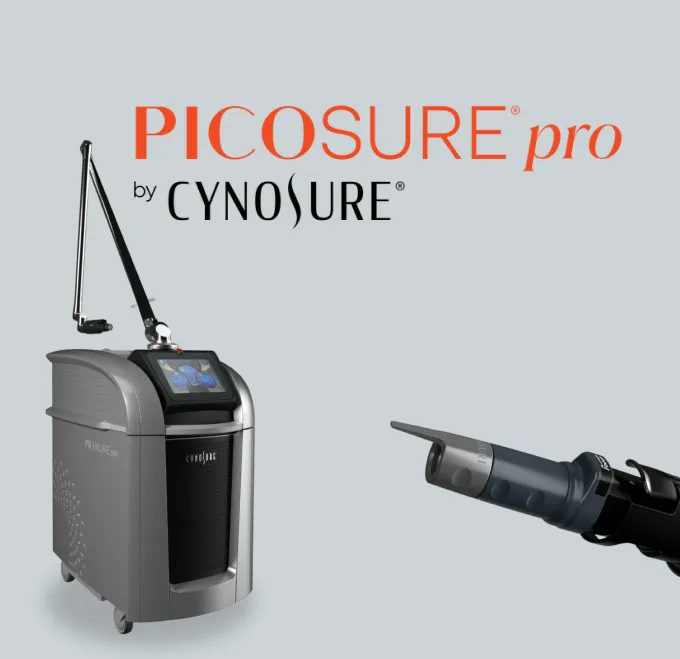
The safest laser treatment for melasma is a picosecond laser like PicoSure Pro, which shatters pigment with pressure instead of heat — the very trigger that makes most lasers and IPL push melasma darker. If a past cream, peel, or laser made your patches come back darker, that mechanism is why; you're not imagining it. Melasma is one of the most stubborn pigment conditions there is, and many of the tools that work on ordinary dark spots can actually aggravate it.
That's why we brought PicoSure Pro to Jeune Medspa. Here's why melasma behaves the way it does, how this technology differs from what you may have tried before, and what an honest treatment plan looks like.
Key Takeaways
- Heat is a melasma trigger — which is why IPL and traditional heat-based lasers can make it worse.
- PicoSure Pro shatters pigment with picosecond pressure (PressureWave) instead of heat.
- Plan on 3–5 sessions of 30–45 minutes each, with only a brief flush afterward.
- Melasma is managed, not cured — daily SPF and maintenance visits protect your results.
- PicoSure Pro pricing is being finalized; a complimentary consultation covers your exact plan and cost.
Why Melasma Isn't Like an Ordinary Dark Spot
A typical sunspot is fairly simple: one patch of skin made extra pigment in response to sun exposure, and it mostly stays put. Melasma behaves differently. It usually appears as soft, symmetrical patches across the cheeks, forehead, or upper lip, and it's driven from within — hormones, genetics, heat, and sunlight all play a role.
Pregnancy, birth control, and other hormonal shifts are common triggers, which is part of why melasma so often shows up in women in their 30s and 40s. The pigment-producing cells involved aren't simply damaged in one spot; they're overactive and easily provoked. That's why melasma is considered a chronic condition — it can fade substantially with treatment, then flare again after a sunny vacation or a stretch of hormonal change.
This distinction matters, because a treatment designed for ordinary dark spots can be exactly the wrong tool for melasma.
Why Some Lasers Make Melasma Worse
Most traditional pigment treatments — IPL and older heat-based lasers among them — work by heating pigment until it breaks apart. For a stable sunspot, that approach is often fine. For melasma, it can backfire.
Heat itself is a melasma trigger. When already-reactive pigment cells absorb thermal energy, they can respond by producing more pigment, not less. Some patients see their patches lighten briefly, then rebound darker than where they started. The stakes are even higher in medium and deeper skin tones, where inflammation of any kind is more likely to leave post-inflammatory hyperpigmentation (PIH) behind.
So if a past laser or IPL treatment made your melasma worse, your caution is well founded. The problem wasn't your skin — it was the mechanism. A melasma laser treatment can only work if it gets pigment out without heating the skin in the process.
How PicoSure Pro's PressureWave Technology Works
PicoSure Pro, made by Cynosure, is a 755nm picosecond laser — its pulses last trillionths of a second. At that speed, energy arrives faster than the skin can convert it into meaningful heat. Instead, it creates a photomechanical effect called PressureWave: pigment is shattered by pressure into microscopic particles that your body's own clearance systems carry away.
Because the mechanism is pressure rather than heat, there's far less thermal stress on the surrounding skin — and a lower risk of the post-treatment darkening that makes heat-based devices so unpredictable for melasma.
That difference is why PicoSure Pro is, according to Cynosure, the first and only picosecond laser FDA-cleared to safely treat pigmentary conditions like melasma, post-inflammatory hyperpigmentation (PIH), Nevus of Ota, and Hori's nevus across all skin types. If you're also weighing a post-inflammatory hyperpigmentation treatment for marks left behind by acne or irritation, the same approach applies.
There's a skin-quality benefit, too. The Platinum Focus lens array concentrates energy into tiny zones within the epidermis — called LIOBs — that prompt the skin to build new collagen and elastin. Many patients notice smoother, brighter skin alongside the pigment clearing.
What a PicoSure Pro Melasma Treatment Course Looks Like
A full-face session takes about 30 to 45 minutes. Most people describe the sensation as light rubber-band snaps — brisk, but very manageable. Afterward you'll have a mild flush that typically settles within two to six hours, and then you're back to your normal routine. There's no peeling or wound-care period to plan around.
Melasma is treated as a series, not a single visit. Most patients need three to five sessions, and because melasma is chronic, we recommend maintenance treatments every three to six months to hold your results.
Your exact plan depends on how deep your pigment sits and how your skin responds — which is what we map out together at a complimentary consultation. You can book online whenever you're ready.
Designed for All Skin Tones — Including Asian Skin
For years, people with olive, medium, and deeper complexions were told lasers were too risky for their melasma — and with heat-based devices, that caution was justified. Thermal energy in reactive, pigment-rich skin is a recipe for PIH.
PicoSure Pro changes that calculus. Its picosecond, pressure-based approach is designed to be safe across all skin types, including darker and Asian skin. That matters to many of the patients we see in La Habra and across north Orange County, where a laser safe for Asian skin with melasma has been genuinely hard to find.
It also fits the K-beauty philosophy behind much of our menu: clear pigment gently, then strengthen the skin itself. Many of our melasma patients pair their laser plan with Rejuran skin booster sessions — polynucleotide injections that support elasticity and the skin barrier, including a Tone-Up variant aimed specifically at brightening.
Honest Expectations: Melasma Is Managed, Not Cured
We won't tell you PicoSure Pro — or anything else — will cure your melasma, because nothing does. Melasma is a chronic condition. What a good plan can do is clear visible pigment substantially, calm the cycle of flares, and give you a realistic way to keep it controlled. Results vary from person to person, and we'll be straightforward about what your skin is likely to do.
Sun protection is non-negotiable. Daily broad-spectrum sunscreen — reapplied when you're outdoors — plus hats and shade do as much to protect your investment as the laser itself. Minimizing heat triggers helps, too.
To get a sense of what realistic outcomes look like, browse our before and after gallery.
When a Different Approach Fits Better
Not every dark patch is melasma, and PicoSure Pro isn't automatically the right answer. Isolated sunspots, freckling, or a single stubborn mark may respond well to our dark spot removal treatments. If your main concern is overall dullness or uneven tone rather than defined patches, an injectable skin booster may be the better starting point.
Because these conditions can look alike — and because treating melasma as if it were a sunspot is exactly how skin gets damaged — we start every pigment patient with an in-person assessment. Bring your history: what you've tried, what helped, and what made things worse. All of it informs the plan.
Melasma Treatment in Orange County: Visit Us in La Habra
Jeune Medspa is a boutique med spa at 721 W. Whittier Blvd, Suite Q, La Habra — an easy drive from Fullerton, Brea, Whittier, and the surrounding communities. We're open Tuesday, Thursday, Friday, and Saturday, 11am to 7pm.
Consultations are complimentary, and PicoSure Pro pricing is currently being finalized — we'll walk you through exact costs and payment options like Cherry financing along with your full treatment plan when we assess your skin in person. Learn more on our PicoSure Pro page, call us at (562) 332-1300, or schedule your consultation online.
Frequently Asked Questions
How many PicoSure Pro sessions does melasma usually take?
Most melasma patients see the best results from a series of three to five treatments. Because melasma is chronic, we then recommend periodic maintenance — usually two to four visits a year — to keep pigment from rebuilding. Your exact plan depends on how your skin responds, which we reassess as you go.
Does PicoSure Pro hurt?
Not much, for most people. The sensation is usually compared to a quick rubber-band snap against the skin — noticeable in the moment, but brief and easy to tolerate for the length of a session.
How much downtime is there after PicoSure Pro?
Practically none — there's no peeling, no wound care, and no social downtime to schedule around. The only visible sign of treatment is some temporary redness, which typically settles by later the same day, so most patients head straight back to their plans.
Is PicoSure Pro safe for Asian skin and darker skin tones?
Because it clears pigment with picosecond pressure rather than heat, PicoSure Pro is FDA-cleared to safely treat pigmentary conditions like melasma across all skin types — including the darker and Asian skin tones that were often steered away from heat-based lasers because of hyperpigmentation risk. That clearance is one of the main reasons we chose this device for our practice.
Will my melasma come back after treatment?
It can — melasma is a chronic condition that's managed, not cured. Daily sun protection and periodic maintenance sessions are what keep pigment from rebuilding. Patients who consistently guard against sun and heat triggers hold their results far better.
How do I know if my dark patches are actually melasma?
Melasma typically shows up as soft, symmetrical patches on the cheeks, forehead, or upper lip, while sunspots tend to be smaller and more defined. The distinction matters because the two are treated differently. We examine your skin and review your history at a complimentary consultation before recommending anything.
This article is for general education and is not medical advice. Individual results vary. A complimentary in-person consultation at Jeune Medspa is the best way to find out whether a treatment is right for you.